
UAE Wafr launches pre seed funding round and its permissioned blockchain
UAE based Wafr, a financial technology company building a global Islamic financial platform, has announced the conclusion of its pre-seed funding round and the launch of its permissioned blockchain, WafrChain, its first product for on-chain Shariah-compliant sukuk, with sukuk tokenization now live on the platform. Beyond sukuk, Wafr’s institutional roadmap includes fund tokenization, tokenized deposits, trade finance and business-to-business settlement. Its consumer plans span global accounts, cross-border remittances and cards, with agentic AI and stablecoin-enabled settlement forming part of its wider development strategy.
The round brings together individual investors including Coen Jonker, co-founder of Tyme Group and former Commonwealth Bank of Australia Group Executive, and Neal Cross, co-founder of PictureWealth and former Chief Innovation Officer of DBS Bank.
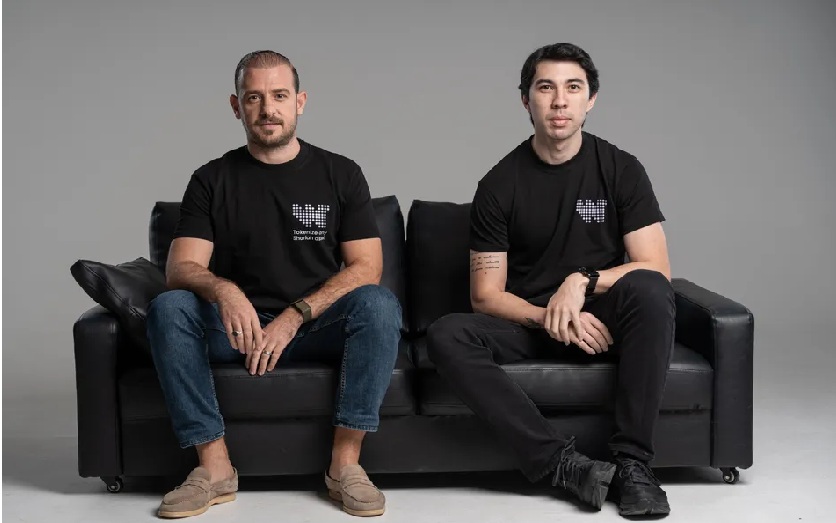
Wafr’s co-founding team includes Chief Executive Officer Mahmoud Bouchelif, a former Islamic banker and founder of LeanTech SG, and Chief Product Officer Anthony Murphy, whose experience includes launching digital banking products at AMP, Commonwealth Bank of Australia and Macquarie Bank. Bouchelif built LeanTech SG into a profitable business with 7-figure revenue, without external funding, and has advised GCC banking leaders on digital transformation for approximately a decade.
Wafr’s purpose, “Abundance for everyone”, reflects its ambition to make fair, transparent and ethical financial services accessible across borders. The company is building towards a global financial platform rooted in Shariah-compliant principles and open to people of every faith, connecting institutional infrastructure with services for individuals and businesses.
Sukuk remain one of the most complex instruments in Islamic finance to bring to market. A single issuance typically involves eight separate parties, including the issuer, the trustee, arrangers, the Shariah board, custodians, the paying agent, distributors and investors, each keeping its own record of the same instrument. Every transfer, profit payment and corporate action is re-keyed and reconciled between them, adding cost, delay and the risk of error to each issuance, which can take many months and in some cases more than a year to bring to market.
WafrChain is a private, permissioned blockchain designed to connect the institutions involved in the sukuk lifecycle through a shared record. Instrument terms, including unit price, profit schedule, and maturity, are recorded on-chain alongside the approval of the issuer’s own Shariah board before distribution, while Wafr’s Shariah board works with each issuer to confirm that the structure is compliant.
The platform connects issuers with distributors and institutional buyers and uses smart contracts to route profit payments. Settlement can take place in fiat currency, through local real-time gross settlement systems and SWIFT, or in stablecoins, and institutions can integrate WafrChain with their existing systems through a single API.
Transactions reach finality in 300 milliseconds, and each participant can see only its own activity, so issuers, distributors and investors keep their positions private from one another. WafrChain is also designed to continue operating with only a third of its nodes active.
Mahmoud Bouchelif, Co-Founder and Chief Executive Officer of Wafr, explained that Islamic finance can bring abundance to people, businesses and economies, yet access to services that reflect its principles remains uneven.
He adds, “We are building Wafr for everyone who believes finance should be fair, transparent and ethical, whatever their faith. WafrChain is our starting point, giving institutions a foundation for bringing Shariah-compliant assets on-chain while we develop the services people need to manage their financial lives across borders.”
Anthony Murphy, Co-Founder and Chief Product Officer of Wafr, noted that technology is making Shariah compliant and ethical financial services simpler, more accessible and more relevant to how people manager their money today.
Coen Jonker, co founder of Tyme Group, explained, “I have long believed that someone will build a truly global digital finance business for the Muslim world. The need is clear, the opportunity is enormous, and the technology now makes it possible to think beyond traditional banking models. Wafr is pursuing that ambition with a clear sense of purpose, and I’m excited by Mahmoud’s determination and his co-founders to make it happen.”
According to the ICD–LSEG Islamic Finance Development Report 2026, global Islamic finance assets reached US$6.5 trillion in 2025, up 9% year on year. Sukuk outstanding stood at US$1.14 trillion, while annual issuance rose 14.5% to US$291.4 billion.