





UAE and Morocco Central Banks sign MoUs on CBDC, payments and crypto regulations
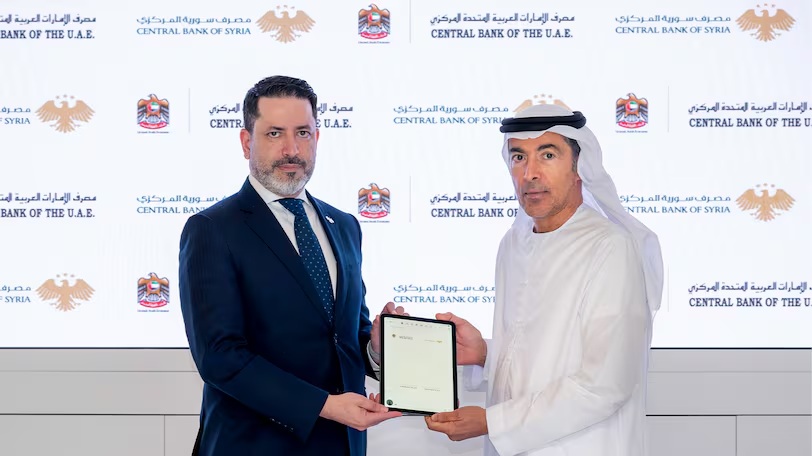
The Central Bank of the UAE (CBUAE) and Morocco’s Central Bank, Bank Al-Maghrib, signed two Memoranda of Understanding (MoUs) on October 5th, 2026, covering banking supervision, Islamic finance, payment systems, Central Bank Digital Currencies (CBDCs) and virtual assets.
The MoUs were signed at the CBUAE’s headquarters in Abu Dhabi by CBUAE Governor Khaled Mohamed Balama and Bank Al-Maghrib Governor Abdellatif Jouahri. The agreements aim to deepen financial ties between the UAE and Morocco while exploring faster and more efficient cross-border transactions.
Banking supervision and Islamic finance
Under the first MoU, the two central banks will exchange supervisory information on banks and financial institutions, coordinate on regulatory practices and build institutional capacity.
The agreement also covers cooperation between Shariah governance bodies and the development of cross-border Shariah-compliant financing, including trade finance and infrastructure investment.
Payment systems and CBDCs
The second MoU will explore links between the countries’ instant-payment platforms, national card switches and financial messaging systems. It also includes the possible mutual acceptance of domestic payment cards, subject to each country’s regulatory and supervisory requirements.
Both institutions will exchange expertise on retail and wholesale CBDCs and assess how sovereign digital currencies could support payments between the UAE and Morocco. Cooperation will also extend to fintech and regulatory frameworks for virtual assets, including crypto-assets, stablecoins and consumer protection.
The UAE’s work on CBDCs predates its Digital Dirham strategy. In 2019, the CBUAE and the Saudi Central Bank launched Project Aber, a joint wholesale CBDC initiative designed to test domestic and cross-border settlement using distributed ledger technology. The project concluded in 2020 and found that DLT could support payment systems at both local and cross-border levels.
In February 2021, the CBUAE joined Project mBridge with the BIS Innovation Hub, the Hong Kong Monetary Authority, the Bank of Thailand and the Digital Currency Institute of the People’s Bank of China. The project tests real-time cross-border transfers using multiple CBDCs. The UAE then announced its Digital Dirham strategy in March 2023 as part of the Financial Infrastructure Transformation programme, covering the soft launch of mBridge, a bilateral CBDC bridge with India and proof-of-concept work for domestic wholesale and retail CBDC use.
Morocco has taken a more gradual approach. Bank Al-Maghrib discussed the opportunities and risks of issuing a CBDC in its 2019 annual report and later created a committee to study cryptocurrencies and sovereign digital currency. In 2022, Governor Jouahri said the bank was consulting other central banks, the International Monetary Fund and the World Bank as it assessed the regulatory and technical questions surrounding both areas.
By 2024, Jouahri said the Moroccan Digital Currency project had been running for more than three years, with a focus on financial inclusion, monetary policy and financial stability. Bank Al-Maghrib later confirmed that it had completed an initial retail peer-to-peer experiment and was testing a cross-border transfer use case with the Central Bank of Egypt, with support from the World Bank. Morocco has not announced a launch date for a digital dirham.
Morocco moves from crypto ban to regulation
Morocco’s position on crypto assets has also been evolving. In November 2017, Bank Al-Maghrib, the Moroccan Capital Market Authority and the Office des Changes warned that virtual-currency transactions breached the country’s foreign-exchange rules. The warning created a de facto prohibition, although crypto ownership and trading continued.
In June 2022, Bank Al-Maghrib announced that it was developing a crypto bill with input from the IMF and the World Bank. In November 2024, Jouahri said the draft law governing crypto assets had been prepared and was in the adoption process. At GITEX Africa in April 2025, Bank Al-Maghrib Director General Abderrahim Bouazza said the text had moved to the Ministry of Economy and Finance for the next stage of review.
The resulting Draft Bill No. 42.25 was published in November 2025. It proposes licensing and supervision for crypto-asset service providers and token issuers, while introducing rules on market integrity, anti-money laundering, consumer protection and financial stability. Oversight would be shared between Bank Al-Maghrib and the Moroccan Capital Market Authority, with the central bank responsible for asset-referenced tokens such as stablecoins.
The bill excludes CBDCs, non-fungible tokens and crypto mining from its scope. It also does not make cryptocurrencies legal tender or authorize their use as a means of payment. As of October 2026, the 2017 exchange-control prohibition remains in force while Draft Bill No. 42.25 awaits adoption.
Balama said the agreements reflect the UAE’s commitment to expanding banking and financial cooperation with Morocco, including supervisory expertise, Islamic finance and stronger payment links.
Jouahri described the MoUs as an important step in consolidating the partnership between the two central banks and said the cooperation could improve cross-border transactions while allowing both sides to explore the use of CBDCs in bilateral payments.
The agreements place CBDCs and regulated digital assets at the centre of a wider UAE-Morocco financial partnership, bringing together two markets that are moving at different speeds but increasingly in the same direction.