





FSRA in UAE pays big attention to DeFi with new consultation paper
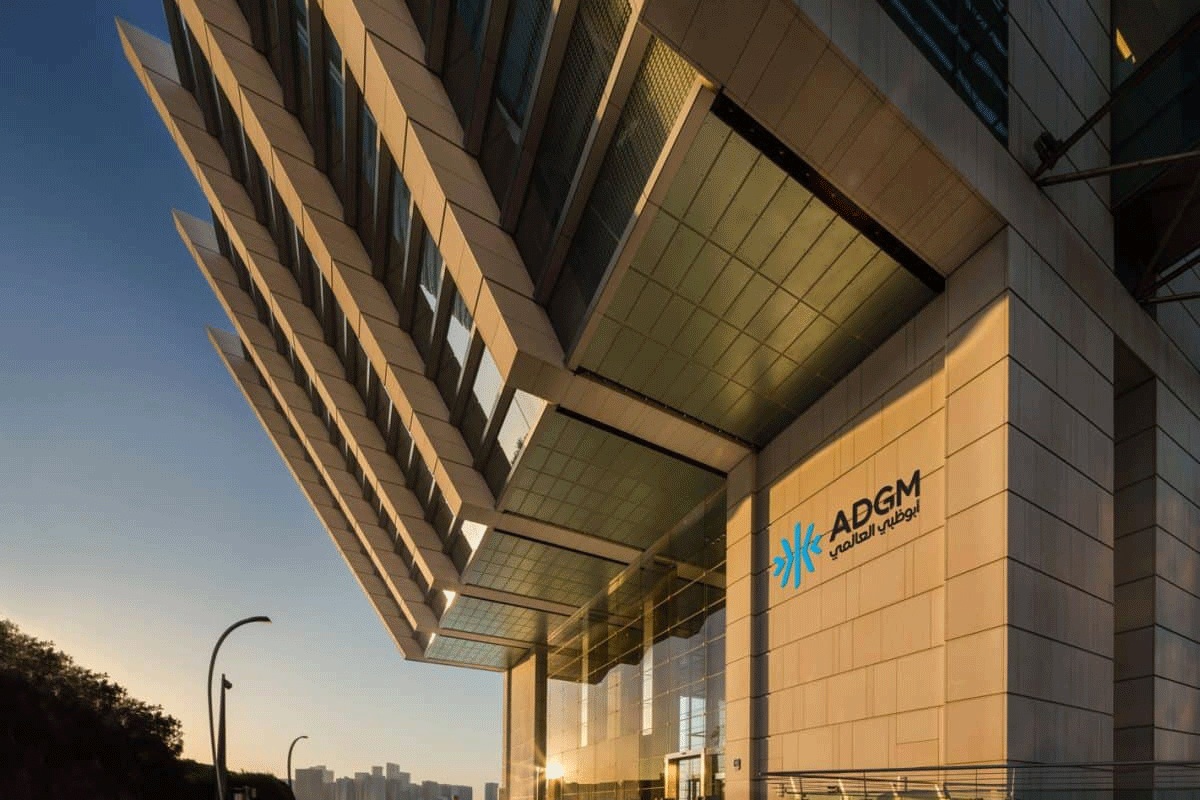
Abu Dhabi Global Market’s latest consultation suggests its regulator is moving beyond the question of whether decentralised finance belongs in the regulated financial system and towards the more practical issue of how licensed institutions can use it safely.
On 6 October, ADGM’s Financial Services Regulatory Authority published proposed DeFi Risk Management Guidance for Authorised Persons and Recognised Bodies. The document covers governance, due diligence, continuous monitoring, financial-crime controls, incident escalation, recordkeeping, auditability, staff competence and client-asset safeguards.
Its intended audience is not an unregulated protocol developer operating at the edge of the market, but firms already inside the FSRA’s perimeter that may connect to DeFi protocols or venues as part of regulated business on opportunities, risks and what a future framework might look like.
It also articulated the principle that DeFi does not change the underlying nature of financial services and that equivalent risks should attract equivalent rules. The new proposal converts that policy debate into concrete supervisory expectations.
Does that mean ADGM is moving deeper into DeFi? Yes, maybe most probably, but through regulated intermediaries rather than by conferring blanket approval on decentralized protocols.
The guidance explicitly does not create a regime for regulating DeFi protocols, establish new categories of digital assets or decide in advance whether a token, synthetic exposure or arrangement sits inside the regulatory perimeter. Those questions will remain subject to the Financial Services and Markets Regulations 2015, FSRA rulebooks and case-by-case analysis.
The proposed guidance asks firms to evaluate smart-contract risk, protocol governance, oracles, bridges, interoperability, custody and asset access, as well as third-party and concentration risk. In other words, the FSRA is preparing for regulated balance sheets, client assets and market infrastructure to develop real DeFi touchpoints — and wants controls in place before those exposures become material.
This fits ADGM’s longer-running digital-asset strategy. The FSRA introduced a bespoke virtual-asset framework in 2018 and has continued to update detailed requirements for accepted assets, custody, capital, anti-money-laundering controls and technology governance.FSRA guiding principles for virtual-asset regulation ADGM also operates the RegLab and Digital Lab, controlled environments intended to help firms test financial technology under regulatory supervision.ADGM FinTech ecosystem.
The likely opportunity is not a sudden influx of anonymous, permissionless finance. It is a more controlled form of institutional DeFi: licensed firms using programmable infrastructure for trading, settlement, lending, liquidity or tokenised assets while remaining accountable for governance and client protection. The guidance’s emphasis on traceability, financial-crime constraints and senior-management oversight points firmly in that direction.
There is a commercial logic to that approach. Research on DeFi adoption in the UAE identifies potential in cross-border remittances, real-world-asset tokenisation and automated financing, while highlighting persistent challenges around pseudonymity, smart-contract vulnerabilities, fragmented oversight and enforcement of anti-money-laundering standards. Clearer expectations can give established institutions more confidence to experiment without pretending those risks have disappeared.
The consultation should therefore be read as an enabling move wrapped in a risk-management framework. ADGM is not regulating “DeFi itself” or promising open access to every protocol. It is defining the conditions under which regulated firms may engage with decentralised infrastructure without outsourcing responsibility to code, a governance token or a third-party interface.
That distinction matters. The direction of travel is deeper engagement, but not deregulation. If the final guidance remains close to the proposal, ADGM will have created a clearer bridge between its established regulated-finance perimeter and the programmable markets developing beyond it. For institutions looking for a compliant route into DeFi, that bridge may be more consequential than a standalone DeFi license.