




Iranians move to crypto self custody in time of war
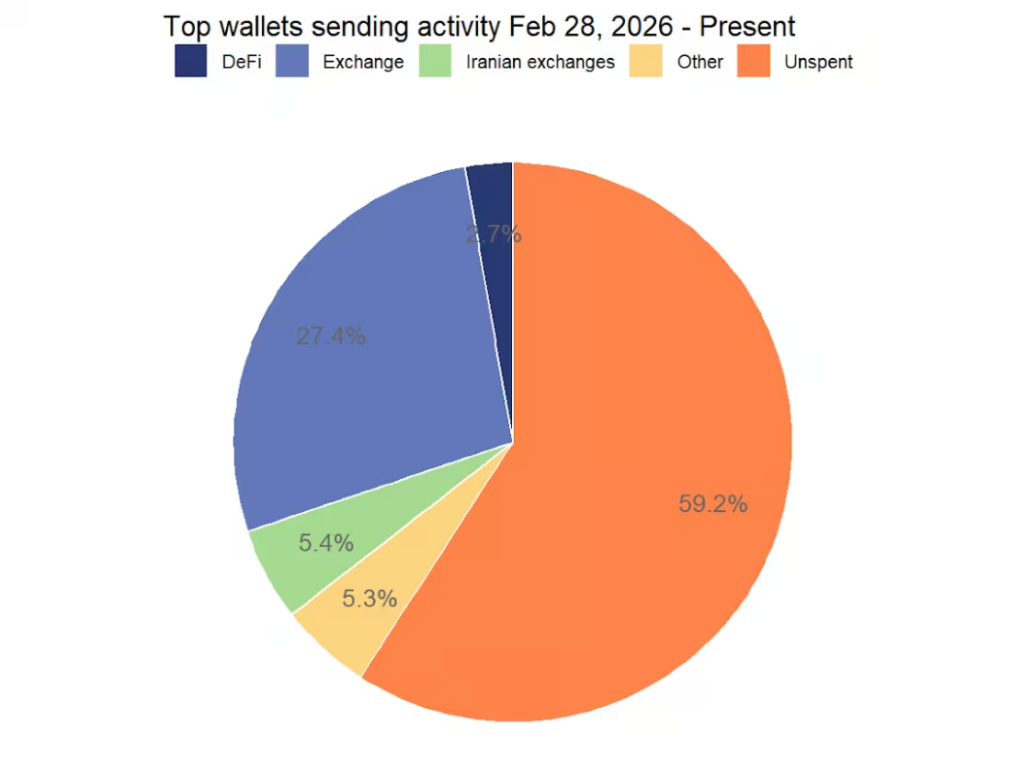
Chainalysis published a report that shows that nearly 60 percent of top wallets in Iran have withdrawn funds from Iranian crypto exchange yet are still holding these funds, which Chainalysis notes is a move to self custody.
Moreover over 27 percent of the wallets transferred funds to mainstream overseas exchanges which according to Chainalysis is either to liquidate these crypto asset or just take them out of their domestic Iranian crypto exchanges.
Smaller portions of the funds have been sent to other services including Iranian exchanges.
Chainalysis analyzed crypto movement into wallets and believe that wallets that withdrew funds from multiple Iranian exchanges transferred funds to a single deposit address at an offshore exchange, indicating that this deposit address could either represent a nested service, or a shared account by administrators at multiple Iranian exchanges.
Other wallets forwarded funds to decentralized exchanges, bridges, smart contracts, and other personal wallets. Additionally a wallet that withdrew funds from an Iranian exchange used a bridge to move funds to another blockchain and then transferred the funds back into the Iranian ecosystem.
The report also noted that some of the wallets that withdrew funds during the spike have historical upstream or downstream exposure to wallets that have been identified as belonging to the IRGC or services processing IRGC funds, indicating that at least a portion of the activity following the strikes could represent Iranian state movement of funds.
There are $7.8 billion in the crypto ecosystem of Iran. At the beginning of the war more than $10 million was moved out of local exchanges.
Finally according to Chainalysis, it’s extremely difficult to confidently separate retail flight from service-level wallet management, from state-related activity. Several factors complicate the picture:
While Nobitex has largely been inaccessible since the airstrikes, blockchain transactions in and out of the service suggest there must be some domestic access.