


Pakistan to tokenize sovereign bonds and debt
Pakistan is exploring the tokenization of sovereign bonds and Naya Pakistan Certificates (NPCs) to modernize capital markets through blockchain-based financial infrastructure.
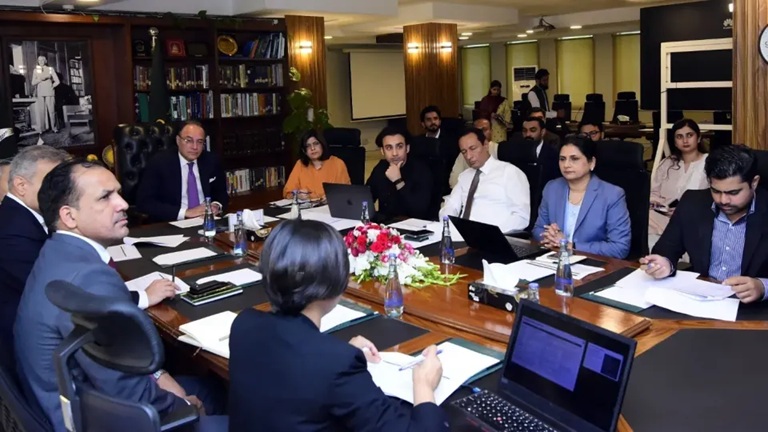
A meeting, presided over by Finance Minister Muhammad Aurangzeb with the State Bank of Pakistan and the Pakistan Virtual Assets Regulatory Authority on May 18, examined potential structures, implementation pathways, regulatory considerations, and next steps for exploring tokenised sovereign instruments.
Discussions centered on an international precedent for sovereign and quasi-sovereign debt tokenization and how Pakistan can adopt a structure aligned with established global market infrastructure. “It was agreed that PVARA, Ministry of Finance and SBP will continue to coordinate on the design, governance, and phased development of the agenda. Further announcements will follow as the work progresses through the appropriate approvals,” the Ministry of Finance said.
The model under consideration, often referred to as a DNN ( Digital Native Node) issued through a regulated financial market infrastructure, allows a sovereign bond to be created on a regulated blockchain platform at the moment of issuance, with same-day settlement before integrating with the conventional international clearing and settlement systems that already serve Pakistan’s existing Eurobond program, added the statement.
The bond’s coupon payments, secondary trading, and final repayment continue through the established global infrastructure, ensuring full interoperability with the institutional investor base that participates in Pakistan’s conventional sovereign issuances.
“The tokenisation of NPCs to potentially enable broader retail participation, improve accessibility for overseas Pakistanis, and create more seamless digital investment rails connected to global markets was also discussed,” the statement said, adding that the session marked one of the first high-level governmental discussions in Pakistan focused specifically on sovereign asset tokenisation and the role blockchain infrastructure can play in modernising capital markets, expanding investor access, and enabling Pakistan to participate in the financial infrastructure of the new economy.
The meeting also explored how blockchain-powered financial infrastructure could help take Pakistan to the world by connecting local financial products and sovereign instruments to a wider international investor base through programmable, digitally native markets. Aurangzeb said, “Pakistan remains committed to exploring forward-looking financial technologies that can support economic modernisation, deepen investor participation, and strengthen financial accessibility”.
He added that discussions around tokenised sovereign instruments represent an important exploratory step toward understanding how emerging infrastructure can support the future evolution of Pakistan’s capital markets.
The statement said the financial system of the next century will not run on paper, manual processes, or fragmented rails. It will run on programmable infrastructure, real-time settlement, and borderless digital networks.
“Discussions around tokenized sovereign instruments represent an important exploratory step toward understanding how emerging infrastructure can support the future evolution of Pakistan’s capital markets,” Aurangzeb was quoted as saying by his ministry.
In January, the finance ministry said it had planned to tokenize up to $2 billion in domestic government debt in an initial phase, as part of broader efforts to modernize public debt markets and broaden investor participation.
In the UAE, tokenization of financial instruments is becoming a reality. Recently ADI Foundation and SettleMint partnered to develop digital securities infrastructure under ADGM’s regulatory framework.
In a single integrated digital securities’ infrastructure, both parties will work together with ADI Foundation providing the compliance ready layer 2 blockchain that serves as an immutable settlement ledger, while
SettleMint provides the Digital Asset Lifecycle Platform (DALP) for token creation, on-chain recording, post-trade servicing, and full lifecycle management using SettleMint’s ERC-3643 implementation.
Andrew Forson President of DeFi Technologies has also noted tokenization of equities, bonds, and treasuries has become essential for business operations and increasing investments in the capital markets in general and the GCC specifically. He explains that in a macroeconomic environment that sees investors seeking the potential for alpha returns, accessing investible assets available in international markets will be a key strategy of alpha seeking portfolio managers. In times of regional macroeconomic instability, the ability to quickly move in and out of asset classes and positions is a strong decision driver that supports the adoption of tokenized RWA.