



Chainalysis: UAE crypto economy grows 32% as MENA’s crypto economy flat at $443.3 billion in 2026
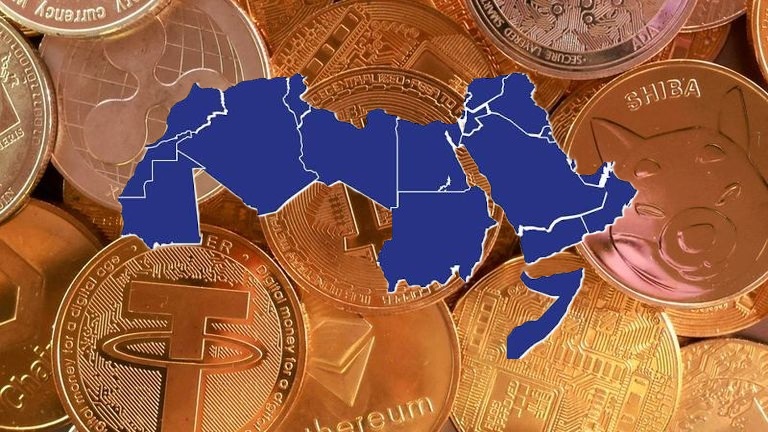
In Chainalysis’s latest blog as a part of its series for its Global crypto adoption report focused on MENA region, it noted that MENA’s crypto economy was flat at $443.3 billion in 2026, an actual 1.4% decline from 2025 when it was at levels of $449.6 billion while UAE crypto economy grew by 32%.
Alternatively, UAE crypto economy grew by 32% to $104.8 billion, which is 73%of Turkey’s size. Excluding the UAE, the rest of MENA contracted 8.6% instead of 1.4%.
As per the report, the UAE’s $102.3 billion crypto services sector provided the vast majority of its crypto economic growth in the 2026 period. This category grew 29% period over period, with centralized exchange inflows growing 22%, to $55 billion, and institutional platforms (custodians and market-makers among them) growing 75% to reach $11.7 billion. Decentralized finance exchanges also saw over $31 billion in total inflows, up 31% over the prior period.
Domestic P2P payments were up 786% period-over-period, and cross-border peer-to-peer inflows jumped 18-fold. Cross-border business payments also spiked nearly 400%, buoyed by a surge of major stablecoin transfers of $1 million or more.
“Many globally underestimate how much stablecoins are being used in B2B transactions” in the UAE, said Henri Arslanian Co-Founder of Nine Blocks Capital. “The UAE has become a global hub for such transactions.” He credited this to the UAE’s many regulated OTC brokers; they have “solid fiat offramps” that make moving out of crypto very easy for businesses.
As for Turkey its crypto economy shrank to $144.5 billion mostly due to regulations and licensing transitions but its domestic peer to peer stablecoin volume grew fivefold to $3.56 billion.
The report attributes this lower crypto adoption in MENA, to the Iran conflict which created cross border pressure and touched very market in addition to an already bear market which cut crypto’s market cap in half.
Sixteen of 24 MENA markets with measurable data grew. Türkiye was MENA’s largest crypto economy in the 2026 period at $144.5 billion, roughly a third of the entire region. ChainAlysis’s overall measure captures value received across service inflows, domestic peer-to-peer, cross-border peer-to-peer, and cross-border business-to-person transfers. As per the report, activity moved off licensed services onto wallet-to-wallet rails, and institutional engagement from banks and licensed platforms deepened. The net effect is a smaller but structurally stronger market.
Turkey now requires CASPs to follow the same compliance protocols as financial institutions. The law “raised the operational bar for the whole industry,” said Burcu Küçükünal, CEO of Stablex, a Turkish exchange. “Crypto in Türkiye is becoming part of traditional finance rather than a parallel system,” Küçükünal said.
“Offering equity and crypto asset services within the same financial group, with due regard to the relevant authorizations and separation of activities, is increasingly on the agenda,” said Salim Karaman, CEO of BtcTurk, Türkiye’s largest crypto exchange. “The key change over the past 12 months has been a shift from assessing interest and potential toward developing services and taking steps to enter the market within the regulatory framework.”
Most importantly is that Turkey’s peer to peer crypto economy hit $3.56 billion in 2026, three times larger than the rest of the MENA combined, and almost all of that was in stablecoins. But the Central Bank of the Republic of Türkiye prohibits using crypto assets to pay for goods and services, so none of that $3.56 billion in domestic wallet-to-wallet volume is moving between buyers and sellers in the real economy. It is moving between Turkish wallets primarily as a dollar-denominated savings and transfer mechanism.
Türkiye also became a world leader in the adoption of tokenized gold. Activity climbed from virtually zero in earlier reporting periods to nearly $1 billion in 2026. UAE as well saw a rise in holders in tokenized gold, and comparative fall among holders of bitcoin. In March 2026, when the UAE first began getting targeted in Iranian attacks, the ranks of bitcoin holders and tokenized gold holders in the UAE both climbed, but then Bitcoin declined and tokenized gold holders increased.
Related Articles

Saudi Arabian’s traded 20 billion USD worth of virtual assets in 2021
May 18, 2022
Deribit’s new crypto brokerage license from VARA Dubai offers Coinbase liquidity and assets
August 13, 2026