

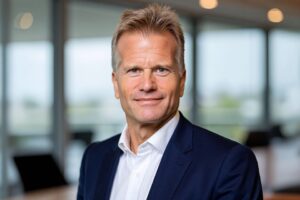
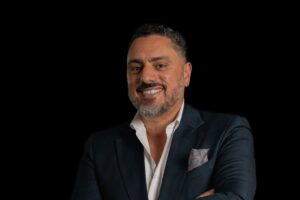
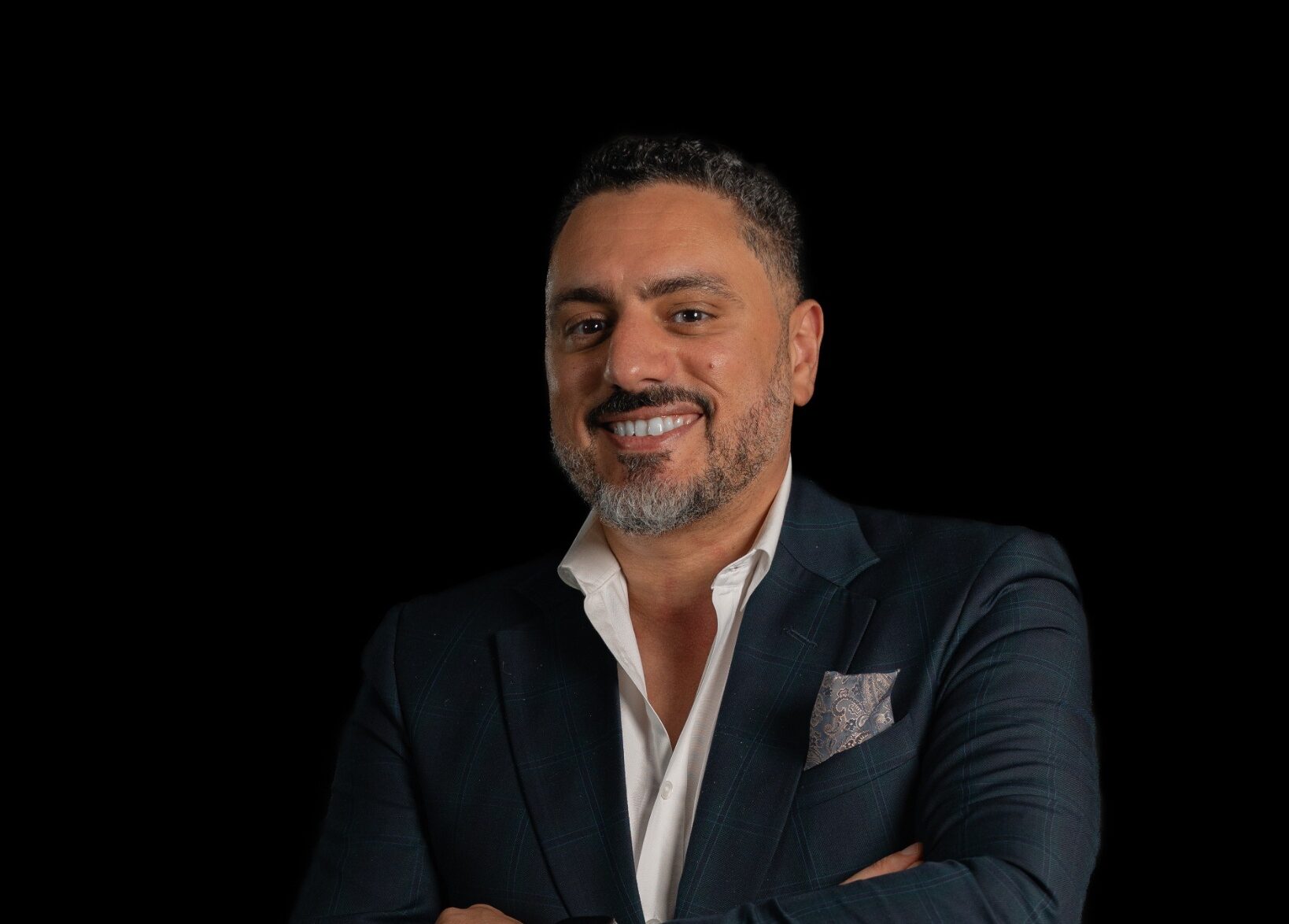
Ahmed Ismail, CEO of Daman Virtual: the future is a financial system operating on digital rails
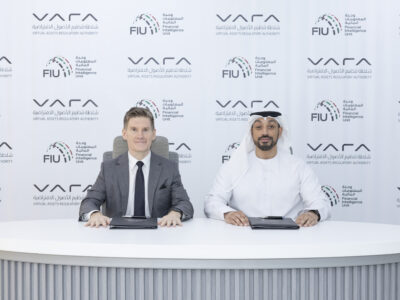
In a time where traditional financial market players are increasingly entering the crypto scene and vice versa with recent standout examples such as Standard Chartered offering crypto trading services in UAE, and Kraken acquiring a major bank in Europe, it was not such a surprise to see UAE-based financial services firm Daman Securities launch and receive a license for Daman Crypto, the institutional digital asset trading platform under Daman Virtual (Daman Virtual Asset Brokerage L.L.C.) as financial systems move on to digital rails.
Lara on the Block spoke with Ahmed Ismail, Co-Founder of Daman Virtual to learn more about the reasoning behind why a traditional financial brokerage company which has been in the market since 1998 launched and entered the crypto sector and what is the strategy moving forward.
Ismail noted that Daman Securities didn’t “get into crypto” but rather recognized where the financial markets were heading and moved towards that.
He explained, “Daman has spent decades in brokerage, asset management and capital markets. Increasingly, the same clients we deal with in traditional markets also hold, trade or transact in digital assets. There was an obvious gap between the experience clients expect from an established financial institution and what they have historically experienced in crypto.”
He adds, “That is the opportunity we saw.”
Daman is bringing its experience of financial assets into the blockchain domain
Today Daman Virtual is offering its clients a regulated access to digital assets just like they offer their clients traditional brokerage services, with the proper onboarding, banking rails, compliance, custody, execution and accountability.
Ismail notes, “Daman Crypto is the platform through which we are bringing that experience to market, with regulated access, deep liquidity, best execution and AED settlement through UAE banking rails. I don’t really see this as Daman moving into a completely different business. It is an extension of what we already do but built for where financial markets are going rather than where they have been.”
According to Ismail nothing much as changed, already Daman Securities business revolved around client money, counterparty risk, execution, liquidity, custody, regulation and operational controls, the only difference infrastructure underneath them.
While the technology is important, the fundamentals don’t disappear just because an asset sits on a blockchain.
He believes this becomes even more relevant when the conversation evolves around tokenization. He explains, “Daman already operates in markets involving funds, equities, fixed income and other financial assets. Those products exist today within traditional financial infrastructure. I genuinely believe that over the coming years a very significant part of financial markets will move on-chain — funds, bonds, equities, private-market assets and eventually areas we probably haven’t even thought about yet.”
In simple terms this is the natural build out as the transition to servicing digital asset markets move forward. For Daman this is easy because they already understand the underlying assets, now they are just building the infrastructure to operate them in a different world.
Financial services sector will be digital asset based in the next five years
With an entrepreneurial and futuristic mindset that sets Daman Securities apart from others, coupled with the evolving nature of traditional brokerage and banking models, Daman was prepared to ask where the market was going rather then simply protecting where they are today.
Ismail clarifies, “Traditional brokerage and banking models are evolving. Margins are compressing in parts of the market, technology is removing some intermediaries and clients increasingly expect things to happen faster and more efficiently.”
He states, “The question for us wasn’t: what does the market look like today? It was: what does financial services look like five years from now, and where do we want Daman to be when we get there?
He also attributes their move to VARA Dubai (Virtual Assets Regulatory Authority) as they offered a sense of confidence given the clear regulatory framework that has been set for digital assets and this is very important for established financial institutions.
But Ismail also shares that it is the banks as well who have changed. He notes, “Banks are becoming increasingly comfortable with regulated digital-asset businesses and with stablecoins and blockchain-based settlement.”
Essentially, it is the culmination of regulation, banking and institutional demand and better infrastructure that was the stepping point for DAMAN’s move. “We felt this was the right point to move rather than wait for the market to become obvious to everybody else.”
Clients will have one financial relationship with traditional and digital financial assets
While today DAMAN is treating both the traditional brokerage business and the crypto digital assets trading one, as separate, mainly because of differences in regulation, infrastructure and market structure, strategically Ismail believes the separation will not last.
“If you believe that funds, equities, bonds and other financial assets increasingly move on chain, then the distinction between a traditional asset and a digital asset starts becoming quite artificial.”
For Ismail, a bond doesn’t suddenly stop being a bond because it settles on a blockchain. The asset is the same. What changes is the infrastructure around ownership, settlement, liquidity and distribution.
He also notes that this applies to money, and that is why stablecoins are already showing us that settlement doesn’t necessarily need to work in the same way it has for the last 30-40 years.
He believes, “Ultimately clients will have one financial relationship covering traditional securities, tokenised securities, digital assets and different forms of cash or stablecoins.”
They won’t particularly care what technology is sitting underneath it. “That is one of the reasons we’re building the capability now.”
Clients request access liquidity and settlement more than crypto speculation
The demand is practical, clients are not only calling DAMAN Virtual to speculate on crypto, but most of the conversation are on access, liquidity, and settlement.
He explains, “A client may already hold USDT, for example, and want to convert a meaningful amount into AED through a regulated counterparty, with the proceeds arriving at their bank account. Or they may want to move capital in the other direction.”
He explains that stablecoins are becoming an increasingly important settlement rail, because it is solving a very real financial problem rather than creating a new speculative product.
Clients using stablecoins are seeking trust, speed, and execution as much as price.
For Ismail, being part of the broader Daman group helps because clients already know who they’re dealing with. They aren’t sending money to an unknown offshore exchange.
He points out, “We’re still early, but what we’re seeing gives us confidence that there is real demand for a regulated bridge between the banking system and digital assets.”
The next five years will bring forth the tokenization of funds, equities, private credit and more
DAMAN Virtual does not want to become another crypto broker, their ambition transcends brokerage into tokenization, not discussion of tokenization at conferences but the real issuance of funds, bonds, and other financial assets.
He explains, “Brokerage is where we’re starting because it solves a very clear problem today: regulated access, execution, liquidity and settlement. But over five years I think the market itself is going to look very different. We see traditional and digital financial infrastructure gradually becoming one market.”
Daman Virtual is positioning itself for that and Dubai is playing a strategic role in that.
“Dubai has set a clear ambition to be one of the major global centres for digital assets and the future of financial services. We want to work in lockstep with that.”
The Digital Asset Leadership Forum. DALF is an example of DAMAN Virtual’s commitment to having a serious conversation about what the next phase of institutional adoption looks like.
“Our five-year vision for Daman Virtual sits within exactly that conversation”
“We’re not here to tokenise Pokémon cards. What interests me is what I think will be a tectonic shift in financial markets over the next five years. Funds in particular are an obvious example. Then you have equities, bonds, private credit and other real-world financial assets.”
Once those assets are on chain, it will change the way they are fundamentally issued, distributed, settled and potentially traded and unlock liquidity in assets and structures that historically have been illiquid.
The expansion will go beyond crypto brokerage into real financial assets, real client demand and products were blockchain genuinely makes the market better.
DEFI Cannot live on its own
According to Ismail, the last five years have taught and shown that DeFi can not live entirely on its own. He notes, “The idea that you could completely remove institutions, regulation and intermediaries from finance was always going to be tested once meaningful amounts of capital entered the system. Markets need guardrails. Investors need accountability. Institutions need legal certainty.”
Yet, traditional finance is not perfect, and parts of it are in structural decline, there are too many intermediaries, settlement can be unnecessarily slow and the infrastructure is often incredibly inefficient.
“Neither model wins on its own. What I think happens is that the two increasingly converge. I call it HyFi — Hybrid Finance.”
According to Ismail Hybrid Finance takes the best elements of blockchain and decentralized infrastructure 24 hours a day 7 days a week, offering transparency, programmability, faster settlement combined with the regulation, governance and institutional framework of traditional finance.
“I think that integration is going to become one of the major themes in capital markets over the next five to ten years. And again, that is one of the conversations we want DALF to help push forward in Dubai.”
Crypto is just one part of the digital assets market
In the final analysis, The CEO of Daman Crypto notes that we should be careful of the word crypto, because digital assets will be much broader than just crypto. They are just one part of the market, the others are tokenized funds, bonds, equities, private credit, real estate and almost any financial asset that can be represented and settled digitally.
He states, “That is where I think the much bigger institutional story sits. Tokenisation can create liquidity and distribution opportunities within funds and other asset classes that simply haven’t existed before.”
As for crypto, as more institutional capital enters, Ismail believes it will stop being a purely speculative asset class.
He explains, “Bitcoin may continue to have a role as an asset within portfolios. Stablecoins are already developing a very clear role in settlement and payments. Other blockchain infrastructure will have completely different uses. I don’t think the question five years from now will simply be: What percentage of my portfolio should be in crypto? The much bigger question will be: how much of the global financial system is now operating on digital rails?”
And I suspect the answer will be considerably more than people expect today.