






Qatar invests in Replit the AI agent for vibe coding
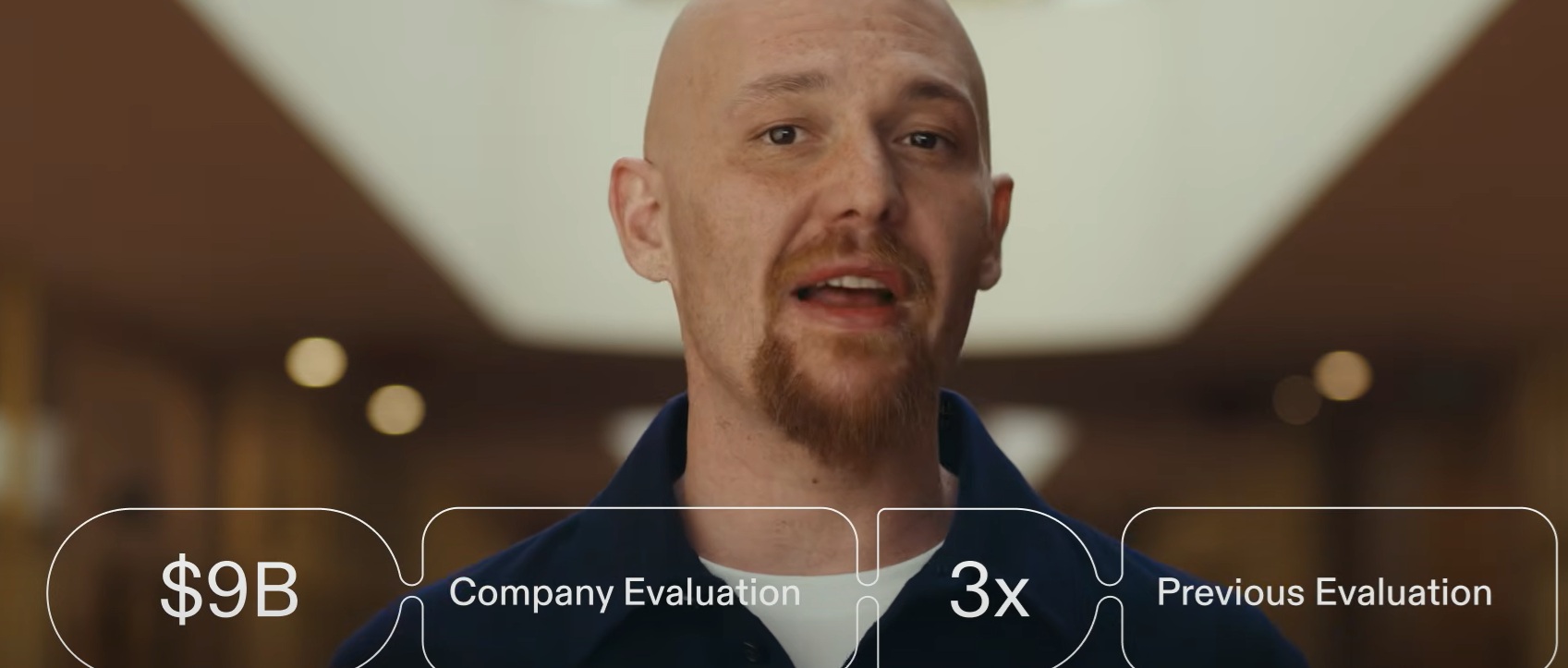
Jordanian national and CEO of Replit, an AI agent that writes its own code, known as vibe coding, Amjad Masad, has raised in a new funding round $400 million. Qatar Investment Authority was one of the investors in the round led by VC firm Georgian, including as well Andreessen Horowitz, Coatue, Donald Trump Jr’s 1789, celebrities Shaquille O’Neal and Jared Leto. The new funds will go mostly toward international expansion, especially in Asia and the Middle East, and to growing the company’s go-to-market team.
As per the announcement, two years ago, Replit CEO Amjad Masad invited Paul Graham, the legendary cofounder of the startup incubator Y Combinator, to his home office near Palo Alto, California, to give Graham a sneak peek of Replit’s new and novel product: an AI agent that could write its own code. It was the first time Graham had seen what would become known as vibe coding. “The name hadn’t even been invented,” Graham recalls.
Now vibe coding, of course, is everywhere, and Replit is looking to take it a step further. Instead of just typing in prompts to instruct the agent on what to code, Replit offers what it calls a digital canvas, where users can tweak mockups and app designs, doodle drawings of new features, and collaborate with other developers in real time. “It’s about designing together with the agent,” says Masad, with the goal of replicating the experience of brainstorming and building in real life. “When I walk around the office, when I see designers working with engineers, they’re on the whiteboard, they’re drawing, they’re doing that sort of stuff.”
While Replit has not disclosed revenues, it did note that it is on track to hit annual recurring revenue of $1 billion by the end of the year.
The round vaults Replit’s valuation to $9 billion, up from $3 billion just six months ago. “They are showing the industry the art of the possible,” says VC Margaret Wu, who led the investment at Georgian. “With each new release, they get closer to this idea of a one-shot software engineering team.”
Masad, the son of a civil engineer and stay-at-home mom, grew up far from Silicon Valley, in Amman, Jordan. His parents were both refugees (his father from Palestine and his mother from Algeria) and he grew up in a lower middle class family. In 1993, when he was six, his father brought home an IBM PC, and a year later he had learned to code, building apps to teach math to his younger brother. As a child attending an international private school with kids wealthier than him, he realized early on that tech could help him economically. “A lot of my friends had Playstations and Xboxes, and I wanted those things,” Masad said. So he started developing software for local internet cafes — all-in-one management systems where customers could create accounts and protect themselves from viruses.
Meanwhile, his mom instilled in him a love of art and literature. As a teen, he performed a type of competitive poetry popular in Arabic culture, similar to slam poetry in the U.S. (He doesn’t perform anymore, but said it helped him with public speaking and improvisational skills.)
Masad states, “We can’t cure cancer. Replit is about making everyone a software engineer…I just know our limits.”
After attending Jordan’s Princess Sumaya University for Technology, he moved to the US in 2012 to join Codeacademy, the startup that teaches people how to code through online courses. Then after an almost three-year stint as an engineer at Facebook, he struck out on his own to found Replit with his wife Haya, now the company’s head of design. The first iteration for the product was a browser-based code editor. One of the company’s big breaks came after Graham discovered the project one day in 2017 while browsing Hacker News, the online forum run by Y Combinator. Graham says he invested in the startup then suggested it enroll in YC. Then he emailed Sam Altman, then-president of the incubator, to try to get it into the program’s Winter 2018 batch. “I gave Amjad a really gold-plated recommendation,” Graham says. “I’ve been looking for this idea for years. And here it is.”
These days Replit’s biggest problem is a fearsome Goliath in the way: Claude Code, the generative coding product by AI giant Anthropic.
Replit hopes to stand out from the competition by being the coding agent for non-technical workers, like sales staff, marketers and small business owners. Instead of working inside a code editor, the company wants to make building apps and software more like graphic design. With Agent 4, users can start by choosing from a series of buttons to tell the agent what they want to create, including spreadsheets, data visualizations, 3D games, and more. The idea is to provide the easiest user interface to navigate, from brainstorming and iterating to deploying the app.
Masad insists Replit’s advantage over Anthropic is its nimbleness and focus as a smaller company.
Now customers including Zillow, Databricks, PayPal and Adobe use it to build internal apps for their teams. Zillow has roughly 600 Replit seats for its employees, who have made more than 7,000 apps using the tool over the past year. Replit’s big advantage is allowing non-engineers to prototype and deploy their ideas quickly, said Lloyd Frink, cofounder and president of Zillow. “You kind of have to understand what’s going on underneath the hood to make use of” other tools like Claude Code and Cursor. Databricks CEO Ali Ghodsi agrees. “The majority of employees at Databricks actually aren’t programmers that are extremely technical. So Replit is perfect for that whole segment.”
Talkdesk, a $10 billion-valued AI customer service company, uses it across several teams, including sales and HR. For example, the company tapped Replit to create an app to test headcount capacity, so the company would know how many roles they could hire on. The process to build the app would have normally taken about two weeks, but instead took two days with Replit, says Shauna Geraghty, SVP and head of global talent.
With millions of users worldwide and over 500,000 professional users, Replit is democratizing software development by removing traditional barriers to application creation.